.webp)





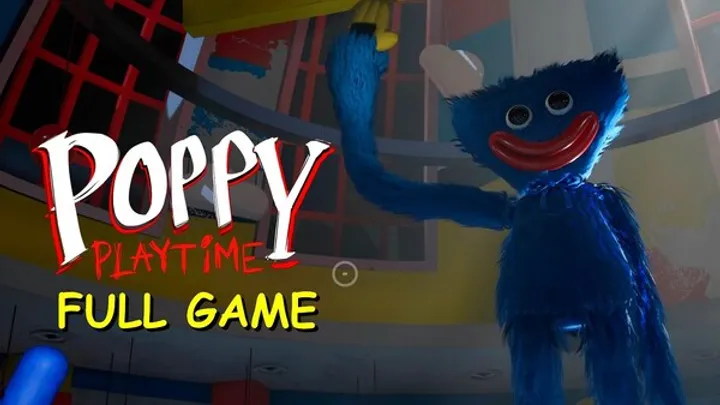
Poppy Playtime is often discussed in terms of its memorable monsters, puzzle mechanics, and unsettling toy-factory atmosphere. Players frequently focus on iconic characters such as Huggy Wuggy, Mommy Long Legs, CatNap, and Poppy herself. Yet beneath the jump scares and chase sequences lies a deeper issue that defines the entire narrative of the game: the Bigger Bodies Initiative.
This article does not examine Poppy Playtime as a general horror game. Instead, it explores one specific issue that sits at the center of the story—the Bigger Bodies Initiative. More than a scientific project, it was the turning point that transformed Playtime Co. from a successful toy manufacturer into a place of horror. Every major disaster, every hostile creature, and nearly every mystery encountered throughout the game can be traced back to this single program.
Understanding the Bigger Bodies Initiative is essential because it explains not only how the monsters were created but also why the factory ultimately collapsed. The initiative reveals how corporate ambition, scientific experimentation, and ethical failure combined to produce consequences far beyond what its creators anticipated.
The Origins of Playtime Co.'s Ambition
Before the horrors began, Playtime Co. was known primarily as a toy company. Its success depended on creating beloved products that appealed to children around the world. However, as the company grew, its ambitions expanded beyond traditional manufacturing.
Executives and researchers began exploring the possibility of creating toys that were not merely objects but living entities capable of movement, learning, and interaction. The idea promised revolutionary commercial opportunities. A toy that could think, respond, and develop emotional bonds with children would be unlike anything previously seen in the industry.
Initially, this vision may have appeared innovative rather than dangerous. Yet the pursuit of increasingly advanced creations gradually pushed the company into territory where ethical boundaries became blurred.
The Creation of the Bigger Bodies Initiative
The Bigger Bodies Initiative emerged as the next stage of Playtime Co.'s research efforts. Instead of creating simple animated toys, scientists sought to produce large-scale living organisms capable of inhabiting toy forms.
The project's objective extended far beyond entertainment products. Researchers attempted to combine biological components with artificial designs, creating creatures that possessed both intelligence and physical capabilities far exceeding those of ordinary toys.
What makes this initiative especially significant is that it fundamentally altered the relationship between creator and creation. The company was no longer manufacturing products. It was engineering living beings.
Why the initiative seemed attractive
From a corporate perspective, the initiative promised extraordinary advantages. Living toys could potentially operate independently, adapt to environments, and create deeper emotional engagement than conventional products.
However, the same qualities that made the experiments attractive also introduced unprecedented risks.
Expected benefits
- Greater product realism.
- Long-term interaction with users.
- Advanced intelligence.
- Unique commercial opportunities.
- Market dominance through innovation.
The Human Element Behind the Experiments
One of the most disturbing aspects of the Bigger Bodies Initiative is its reliance on human subjects. The project was not merely creating biological toys from synthetic materials. Evidence throughout the game strongly suggests that real people became integral components of the experiments.
This revelation transforms the initiative from questionable science into outright horror. The monsters are not simply creatures designed in a laboratory. Many appear to retain traces of human consciousness, memory, emotion, or suffering.
As players uncover recordings, documents, and environmental clues, it becomes increasingly clear that the true tragedy of the factory is not the existence of monsters but the fate of the people who became them.
The loss of identity
The transformation process appears to have stripped individuals of their original lives while preserving fragments of their personalities. This creates a horrifying contradiction. The subjects are neither fully human nor fully artificial.
Many of the creatures exhibit emotional responses that suggest lingering awareness. Fear, anger, loneliness, and resentment appear throughout the factory's inhabitants.
Experiment 1006 and the Turning Point
No discussion of the Bigger Bodies Initiative can ignore Experiment 1006, one of the most important figures in the game's lore. Unlike earlier creations, Experiment 1006 demonstrated intelligence and independence that exceeded expectations.
The significance of Experiment 1006 lies not merely in its power but in its apparent understanding of the system that created it. Rather than behaving as a controllable subject, it became a force capable of influencing events within the factory.
Many theories suggest that Experiment 1006 recognized the cruelty of the initiative and played a major role in disrupting company operations. Whether viewed as villain or victim, it represents the moment when the experiments began escaping human control.
Characteristics that made Experiment 1006 dangerous
- Exceptional intelligence.
- Strategic thinking.
- Adaptability.
- Resistance to containment.
- Influence over other experiments.
The Creation of Huggy Wuggy and Corporate Miscalculation
Huggy Wuggy became the public face of Poppy Playtime, yet the character also demonstrates the dangers inherent in the Bigger Bodies Initiative. While designed as a lovable mascot, the creature possesses physical capabilities far beyond what would ever be necessary for a toy.
The discrepancy highlights a recurring flaw in Playtime Co.'s decision-making. The company repeatedly prioritized innovation without adequately considering consequences. Every advancement focused on capability rather than control.
Huggy Wuggy's existence raises an important question: why would a toy require the strength, mobility, and intelligence displayed within the factory? The answer suggests that researchers had already moved beyond practical commercial goals.
When innovation exceeds purpose
Technology becomes dangerous when creators pursue advancement simply because it is possible. The Bigger Bodies Initiative frequently appears motivated by capability rather than necessity.
As a result, the factory became populated by creations whose abilities vastly exceeded their intended functions.
Mommy Long Legs and the Emotional Consequences
Among all the experiments, Mommy Long Legs provides one of the clearest examples of emotional damage caused by the initiative. Unlike creatures driven primarily by aggression, she demonstrates complex psychological behavior.
Her interactions suggest manipulation, frustration, and a desperate need for control. Rather than functioning as a simple antagonist, she appears trapped within a system that transformed her existence.
This distinction matters because it reveals another consequence of the initiative. The experiments did not merely create monsters. They created suffering. Intelligent beings trapped in unnatural forms became capable of experiencing emotional distress on a profound level.
Psychological trauma within the factory
The game's environment repeatedly suggests that many experiments experienced isolation, fear, and exploitation. These conditions likely contributed to the hostility displayed toward intruders.
Viewed from this perspective, numerous encounters become tragedies rather than straightforward battles between hero and monster.
The Hour of Joy and Systemic Collapse
The Hour of Joy represents the ultimate consequence of the Bigger Bodies Initiative. Whatever precise events occurred during this catastrophe, the outcome is clear: the factory ceased functioning as a normal workplace and transformed into a nightmare.
This event illustrates how fragile the company's control truly was. Playtime Co. invested enormous resources into creating increasingly advanced beings while underestimating the risks associated with autonomy and intelligence.
Once the experiments gained sufficient awareness and opportunity, containment became impossible. The very qualities that researchers celebrated became the source of the company's destruction.
Factors contributing to the collapse
- Overconfidence in containment systems.
- Ethical negligence.
- Growing experiment intelligence.
- Internal secrecy.
- Failure to recognize warning signs.
Why the Monsters Remain in the Factory
An intriguing aspect of Poppy Playtime is that many creatures remain within the factory rather than escaping into the outside world. This behavior suggests that the facility itself has become more than a workplace.
For many experiments, the factory may represent the only environment they have ever known. It serves simultaneously as prison, birthplace, and home. Their identities are inseparable from its corridors and laboratories.
This connection deepens the tragedy of the Bigger Bodies Initiative. The experiments are not merely trapped physically. They are trapped psychologically within a world created by those who exploited them.
The factory as a living ecosystem
Over time, the factory appears to have evolved into an ecosystem shaped by its inhabitants. Different creatures occupy specific areas, establish territories, and interact with their surroundings in unique ways.
The environment no longer belongs to Playtime Co. It belongs to the experiments.
The Ethical Failure at the Core of the Initiative
At its heart, the Bigger Bodies Initiative represents an ethical failure rather than a scientific one. The company's greatest mistake was not creating advanced life. Its greatest mistake was treating that life as property.
Throughout history, scientific progress has often required balancing innovation with responsibility. Playtime Co. abandoned that balance. Human welfare became secondary to corporate objectives.
As a result, every technological achievement generated new moral problems. Intelligence without freedom, consciousness without choice, and existence without dignity became recurring themes throughout the factory.
Ethical questions raised by the initiative
- Can conscious beings be treated as products?
- Should scientific progress have limits?
- What responsibilities do creators owe their creations?
- Can profit justify experimentation on humans?
- What happens when ethics are ignored?
Why the Bigger Bodies Initiative Defines the Entire Story
Every major storyline within Poppy Playtime eventually connects back to the Bigger Bodies Initiative. Huggy Wuggy, Mommy Long Legs, CatNap, Experiment 1006, and numerous other characters exist because of this program.
The initiative serves as the narrative foundation upon which the entire horror experience is built. Without it, there would be no monstrous inhabitants, no abandoned factory, and no central mystery driving the player's journey.
More importantly, it transforms the game from a simple horror adventure into a story about consequences. The true horror is not the appearance of the creatures but the decisions that created them. The monsters are symptoms of a deeper problem rather than the problem itself.
A lesson hidden beneath the horror
The Bigger Bodies Initiative demonstrates how ambition can become destructive when separated from accountability. Scientific capability alone is not enough to ensure positive outcomes.
The downfall of Playtime Co. serves as a warning about unchecked experimentation, corporate secrecy, and the dangers of treating living beings as tools rather than individuals.
Conclusion
The Bigger Bodies Initiative stands as the central issue within Poppy Playtime's narrative. What began as an ambitious attempt to revolutionize toys evolved into a catastrophic series of experiments that destroyed countless lives and ultimately brought down Playtime Co. itself. Through the creation of living toys, the company crossed ethical boundaries it could no longer control.
The initiative's legacy is visible throughout every chapter of the game. The factory's monsters, abandoned facilities, and lingering mysteries all originate from this single program. More than a background plot device, it is the mechanism that drives the entire story. By examining the Bigger Bodies Initiative, players gain a deeper understanding of why the factory became a place of horror and why its inhabitants remain trapped within it.
Ultimately, Poppy Playtime is not merely a story about surviving monsters. It is a story about the consequences of sacrificing ethics for ambition. The Bigger Bodies Initiative transformed innovation into catastrophe, making it the most important and disturbing issue in the entire game.