Don't Starve Together: Surviving the First Winter Without Starving
Introduction
One of the most common reasons players fail in Don't Starve Together (DST) is not combat, bosses, or sanity loss. Instead, it is the first winter. Many new players enter winter with limited food supplies, poor preparation, and little understanding of seasonal mechanics. As temperatures drop and resources become scarce, starvation quickly becomes a deadly threat.
This guide focuses specifically on the challenge of surviving the first winter without starving. Rather than providing a general overview of DST, it explores the progression of food management from Day 1 until the end of winter, helping players build sustainable food systems and avoid common mistakes.
Understanding Why Winter Causes Starvation
The first winter typically begins around Day 21 and lasts for approximately 15 days. During this period, many food sources become less reliable. Berry bushes stop producing berries, farms become less productive, and players spend more time gathering fuel and staying warm.
New players often underestimate how quickly food consumption increases during winter. Longer travel times, reduced resource availability, and additional heating requirements create pressure on food reserves.
The problem becomes even worse when players rely entirely on gathered food rather than establishing renewable food sources before winter arrives. By the time winter starts, it is usually too late to create efficient systems from scratch.
The Hidden Cost of Cold Weather
Cold weather does not directly increase hunger drain, but it forces players to spend valuable time maintaining body temperature. Every minute spent warming up is time not spent gathering food.
As a result, inefficient winter preparation indirectly leads to starvation.
 Days 1-5: Building a Food Foundation
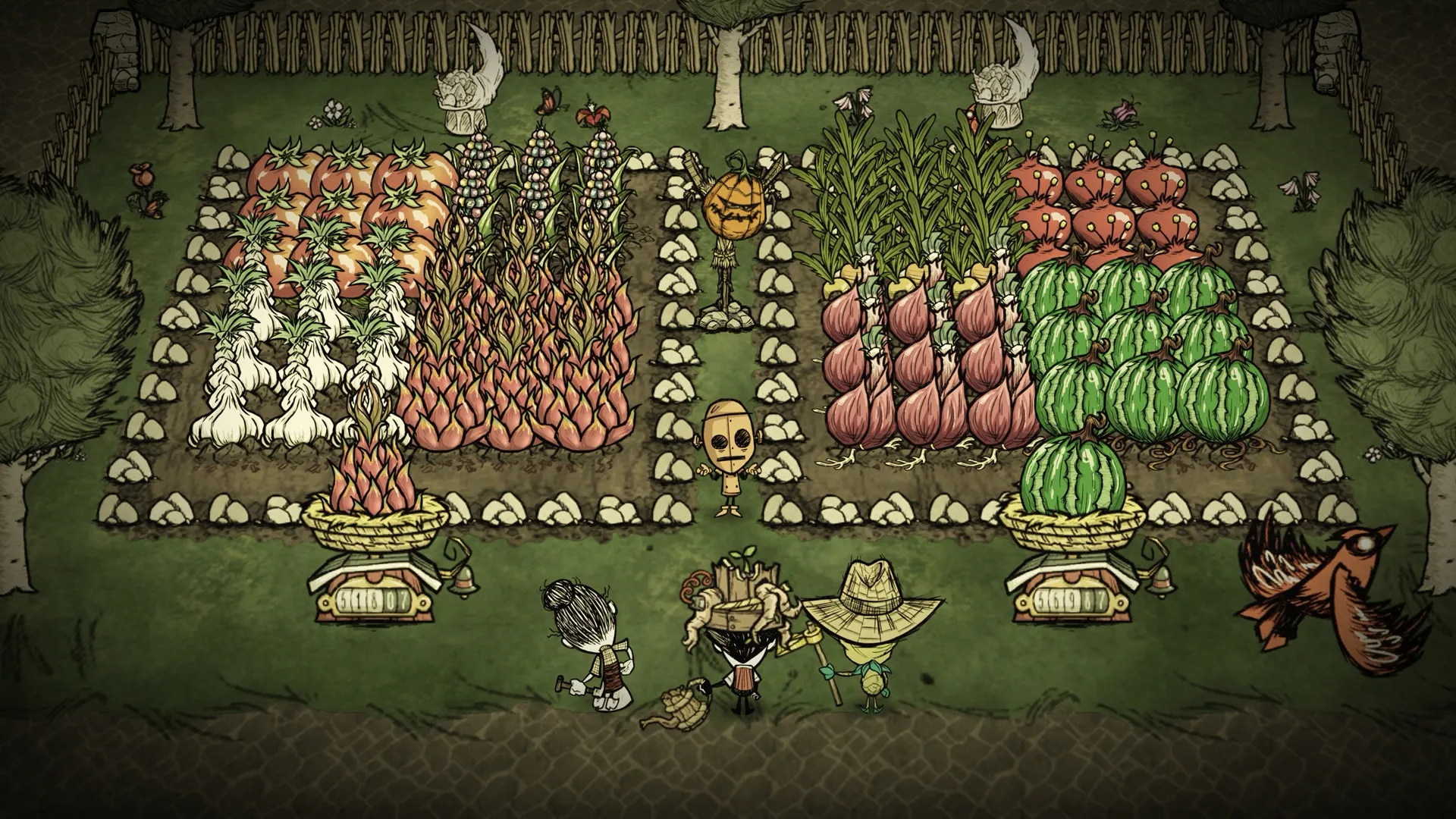
The first five days determine whether winter survival will be easy or difficult. During this period, players should prioritize collecting carrots, berries, seeds, and basic resources while exploring the map.
Food gathered early serves two purposes:
- Immediate hunger management
- Stockpiling resources for winter preparation
Many beginners eat everything they collect. While this solves short-term hunger problems, it leaves no reserve for future emergencies.
Instead, players should preserve valuable ingredients whenever possible and avoid wasting high-quality foods when hunger is only partially depleted.
Prioritizing Exploration
Exploration helps locate:
- Beefalo herds
- Pig villages
- Swamp biomes
- Spider nests
- Rabbit fields
- Rocky biomes
Each location contributes to future food production strategies.
Days 6-10: Establishing Reliable Crock Pot Meals
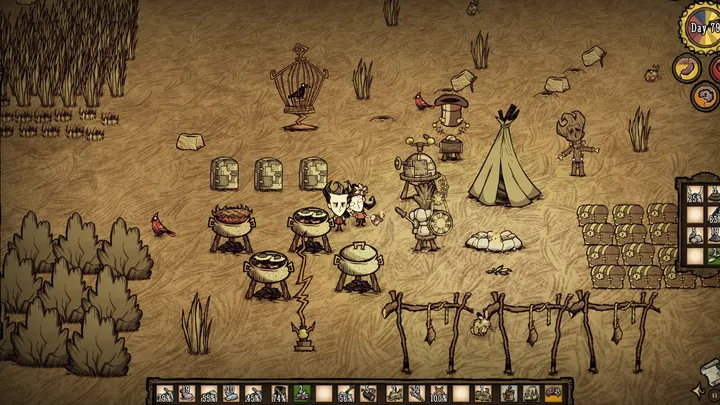
The Crock Pot is one of the most important structures in DST. It transforms mediocre ingredients into highly efficient meals.
A single Meatball recipe can restore significant hunger while requiring only one meat ingredient.
Common Meatball Recipe:
- 1 Monster Meat
- 3 Berries
or
- 1 Morsel
- 3 Filler Ingredients
This efficiency dramatically stretches food supplies throughout the game.
Why Raw Food Is Inefficient
Eating ingredients individually wastes potential hunger value.
For example, four ingredients cooked separately often restore less hunger than a single Crock Pot meal made from those same ingredients.
Experienced players prioritize Crock Pot usage as early as possible.
Days 11-15: Creating Sustainable Meat Sources
Meat becomes increasingly important as winter approaches.
While berries eventually stop producing, meat sources remain available throughout the season.
Reliable meat sources include:
- Spider farming
- Rabbit trapping
- Pig hunting
- Beefalo hunting
- Catcoon hunting
Spider farms are particularly valuable because they provide:
- Monster Meat
- Silk
- Spider Glands
These resources support multiple survival systems simultaneously.
Monster Meat Management
Many new players avoid Monster Meat entirely.
However, Crock Pots can safely convert Monster Meat into useful meals.
Learning this mechanic significantly improves food sustainability.
Days 16-20: Stockpiling Before Winter Begins
The final days before winter should focus on preparation rather than expansion.
Players often make the mistake of starting large projects when they should be gathering resources.
Important winter stockpiles include:
- Logs
- Grass
- Twigs
- Charcoal
- Meat
- Ice Box ingredients
Having excess resources reduces panic once winter arrives.
Building an Ice Box
The Ice Box preserves food much longer than standard storage.
Benefits include:
- Reduced spoilage
- Larger emergency reserves
- Better meal planning
Players entering winter without refrigeration face significantly greater starvation risks.
Early Winter: Adapting to Seasonal Changes
The first few days of winter are usually manageable because stored food remains available.
The challenge comes from adapting to reduced resource generation.
Berry bushes stop producing fruit, making previous gathering routes ineffective.
Players must shift toward hunting and trapping strategies.
Learning New Food Routes
Winter encourages exploration of:
- Rabbit fields
- Spider farms
- Walrus camps
- Penguin colonies
These locations provide seasonal opportunities unavailable during autumn.
Mid-Winter: Managing Food During Resource Scarcity
Around the middle of winter, many players begin exhausting their reserves.
This is where planning becomes critical.
Rather than consuming food immediately after cooking, players should establish consumption schedules.
Effective habits include:
- Carrying emergency meals
- Cooking only when necessary
- Preserving premium ingredients
These practices extend food supplies substantially.
Avoiding Panic Consumption
When supplies appear low, inexperienced players often consume food too quickly.
This behavior accelerates shortages.
A calm and calculated approach generally produces better long-term survival outcomes.
 Using Ice as a Winter Food Multiplier
One of the most powerful winter mechanics involves ice.
Ice becomes abundant during winter and functions as an excellent filler ingredient.
Examples:
- Meatballs
- Meaty Stew
- Other Crock Pot recipes
Because ice is plentiful, it effectively multiplies available meat resources.
Efficient Ice Collection
Players should carry a pickaxe and collect ice whenever convenient.
Benefits include:
- Increased meal production
- Reduced dependence on berries
- Greater food flexibility
Few resources provide as much value during winter.
Hunting Winter-Specific Creatures
Winter introduces unique food opportunities.
Penguins gather in colonies and provide meat and eggs.
Koalefants continue to offer large meat rewards.
MacTusk camps become active and provide valuable loot alongside meat resources.
Balancing Risk and Reward
Some winter hunts involve combat risks.
Players should evaluate:
- Current health
- Weapon durability
- Available healing
Avoiding unnecessary deaths is more important than maximizing short-term food gains.
Common Starvation Mistakes During Winter
Several recurring mistakes cause most starvation-related deaths.
The most common include:
- Entering winter unprepared
- Ignoring Crock Pots
- Wasting Monster Meat
- Failing to build an Ice Box
- Overreliance on berries
- Neglecting hunting opportunities
Each mistake compounds over time and creates resource shortages.
The Berry Bush Trap
Many beginners assume berry bushes are permanent food solutions.
Winter exposes the weakness of this strategy.
Without alternative food systems, starvation becomes likely.
Preparing for Spring Before Winter Ends
Successful players use the final winter days to prepare for spring.
This transition period provides opportunities to:
- Expand farms
- Relocate resources
- Improve infrastructure
- Increase food production
Rather than merely surviving winter, players should emerge stronger than before.
Long-Term Food Security
The ultimate goal is creating renewable food systems that function year-round.
Examples include:
- Spider farms
- Pig farms
- Bee boxes
- Advanced Crock Pot production
These systems reduce seasonal pressure and improve survival consistency.
Conclusion
Surviving the first winter in Don't Starve Together is less about luck and more about preparation. Players who begin planning during the first few days of autumn, establish reliable meat sources, utilize Crock Pots effectively, and stockpile resources before winter arrives dramatically increase their chances of survival. Winter may initially seem intimidating, but with proper food management and strategic planning, it becomes an opportunity for growth rather than a season of starvation.