How to Play BOMBANANA! – A Complete Beginner’s Guide to Defusing Bombs With Friends
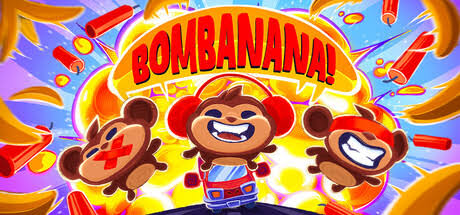
BOMBANANA! is a chaotic cooperative puzzle game on Steam that turns a simple bomb-defusing scenario into a test of communication, teamwork, and quick thinking. The game is designed for three players, with each person taking on a different monkey role. Because every role has different abilities and limitations, no player has all the information needed to solve a bomb alone.
That unusual setup is what makes learning how to play BOMBANANA! so interesting. One player may be able to interact with the bomb but cannot see it, another can read the disposal manual, and another can see the bomb but cannot hear the rest of the team. Success depends on connecting these separate pieces of information before the countdown reaches zero.
For new players, the game can feel confusing during the first few rounds. Once everyone understands their responsibility and establishes a reliable way to communicate, however, the bomb-defusing process becomes much easier to follow. This guide explains how to play BOMBANANA!, from understanding the three roles and solving your first modules to improving teamwork and handling more difficult challenges.
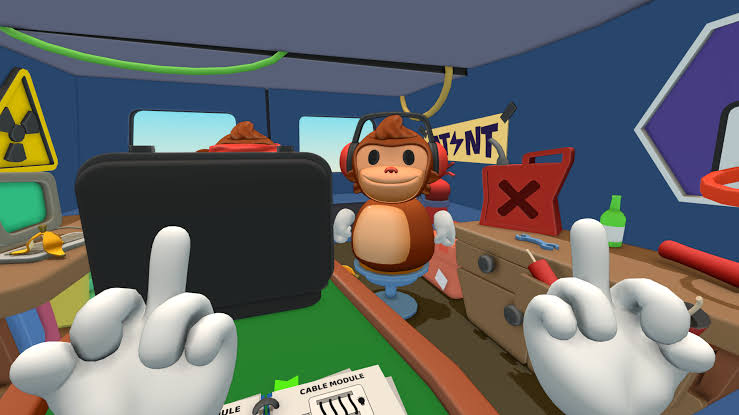
1. Start by Understanding the Basic Gameplay Loop
The first thing to learn in BOMBANANA! is the basic rhythm of a bomb-defusal round. Your team enters a level, examines the available bomb modules, figures out what information is needed, and then works together to perform the correct actions. The objective sounds simple, but the game deliberately divides the information between three players.
Instead of giving everyone the same view of the puzzle, BOMBANANA! gives each monkey a different perspective. This means you cannot simply rely on one experienced player to solve everything. The team has to communicate constantly and make sure the right information reaches the right person.
The basic BOMBANANA! gameplay loop
A typical round can be approached in this order:
- Identify the bomb and its modules.
- Determine which player can see the required information.
- Communicate the relevant details.
- Check the bomb disposal manual.
- Determine the correct solution.
- Tell the player handling the bomb what to do.
- Confirm the action and continue to the next module.
This process may initially feel slower than simply interacting with the bomb yourself. That is intentional. BOMBANANA! turns communication into part of the puzzle, so learning how information moves between players is just as important as learning the actual mechanics.
The game includes a Campaign with handcrafted levels, as well as Endless and Custom modes that provide additional challenges once your team becomes comfortable with the fundamentals. Starting slowly and learning the communication system first will make the later levels much easier to handle.
2. Learn What Each Monkey Role Does
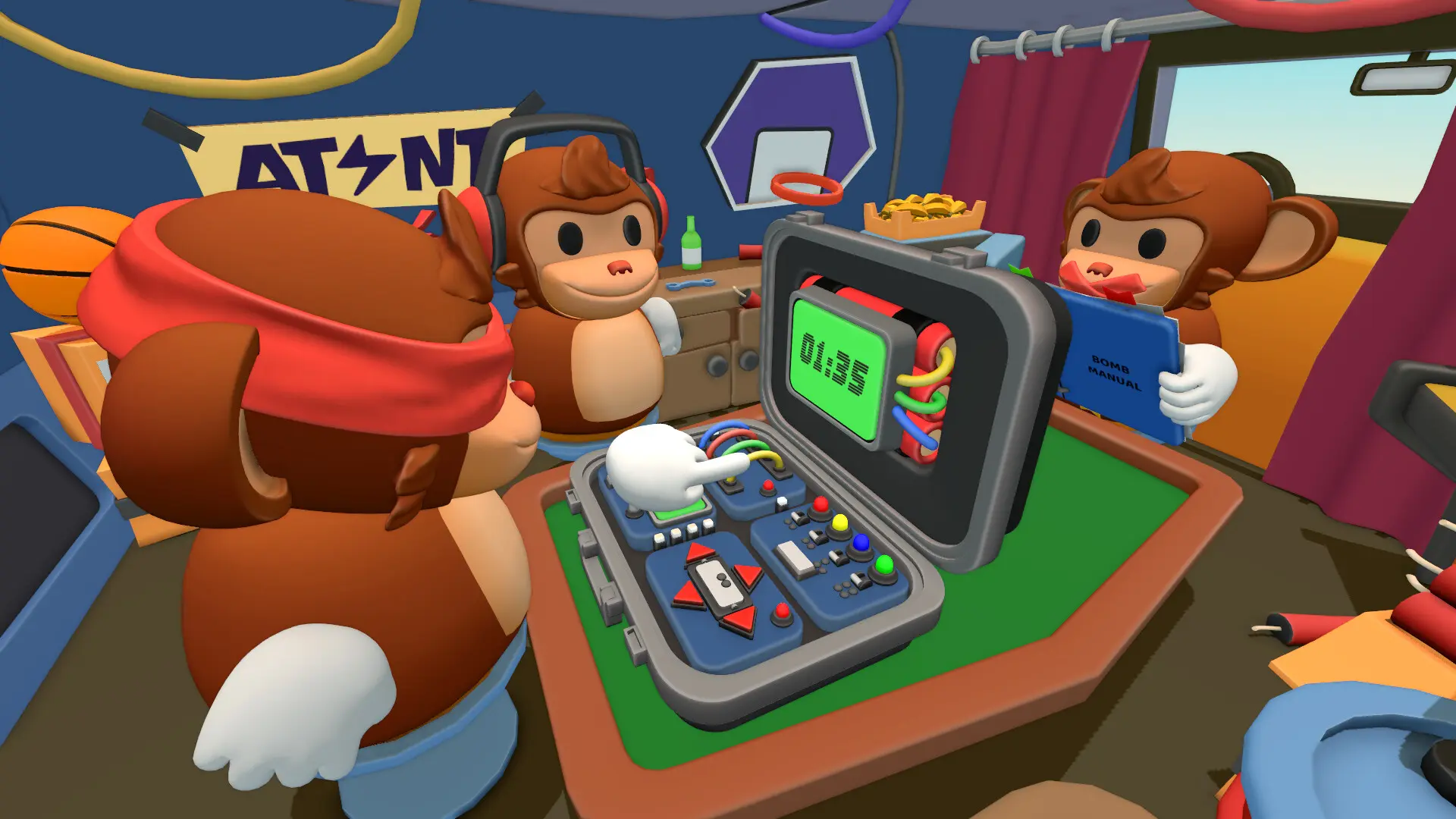
Before attempting complicated puzzles, every player should understand exactly what their monkey can and cannot do. BOMBANANA! revolves around three roles: the Blind Monkey, the Deaf Monkey, and the Mute Monkey. Their limitations are not minor character differences; they determine how the entire team solves a bomb.
The Blind Monkey is responsible for physically interacting with the bomb but cannot see the bomb's visual information. The Deaf Monkey can see the bomb but cannot hear the other players. The Mute Monkey can read the bomb disposal manual and use it to determine the correct solution.
Think of the three roles as one system
It helps to imagine the team as a chain:
Deaf Monkey → Mute Monkey → Blind Monkey
The Deaf Monkey observes the bomb and provides information. The Mute Monkey interprets that information using the manual. The Blind Monkey then performs the required physical action.
None of these players can simply skip the others. Even if someone understands what needs to happen, they still need a way to transfer that information to the player who can actually complete the action.
This is also why BOMBANANA! works particularly well with friends. Every player has a meaningful responsibility, and communication mistakes can become just as important as puzzle mistakes.
Establish your communication system early
Before jumping into difficult levels, agree on simple terminology for things like:
- Left and right
- Up and down
- Center
- Button positions
- Colors
- Symbols
- Numbers
- Pressing or turning objects
Your exact vocabulary does not matter as much as consistency. If everyone uses the same words for the same things, communication becomes faster and less confusing as the difficulty increases.
3. Learn How to Play the Blind Monkey
The Blind Monkey has perhaps the most unusual responsibility in BOMBANANA!. This player can physically interact with the bomb, but cannot visually inspect the information displayed on it. In other words, the Blind Monkey is effectively the team's hands.
This means the Blind Monkey should avoid guessing. If another player says to interact with something, the instruction needs to be specific enough to identify the correct object and action. A vague command can easily result in the wrong button being pressed or the wrong part of a puzzle being manipulated.
Follow instructions instead of trying to solve the bomb
The Blind Monkey does not need to understand every visual detail of the puzzle. Instead, focus on receiving clear instructions and executing them accurately.
A good instruction should ideally tell you:
- Where to interact.
- What object to interact with.
- What action to perform.
- Whether the action needs to be repeated or held.
For example, instead of giving a long explanation about everything visible on the bomb, your teammate should eventually reduce the information to a simple actionable instruction.
Avoid making assumptions
One of the biggest beginner mistakes is assuming that you understood an instruction when you did not. If two buttons sound similar or the direction is unclear, ask for clarification.
It may feel like asking questions wastes time, but making one wrong action can waste far more time. As your team becomes experienced, these confirmations will become shorter and eventually become almost automatic.
4. Learn How the Deaf Monkey Observes the Bomb
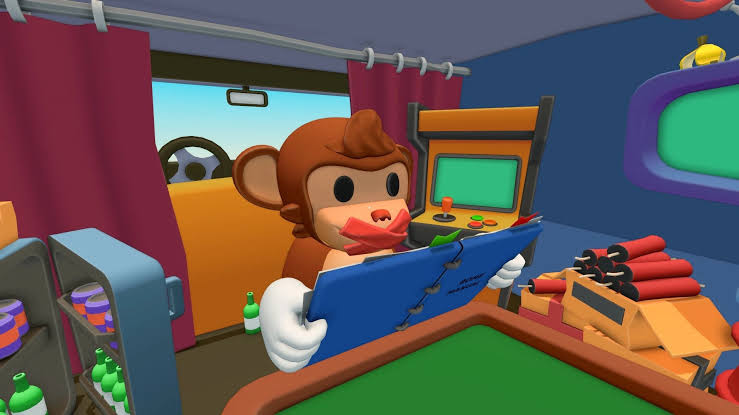
The Deaf Monkey has the opposite problem. This player can see the bomb and the surrounding environment but cannot hear what the other players are saying. That makes observation and visual communication extremely important.
The Deaf Monkey should focus on identifying the information that actually matters to the current puzzle. Bombs can contain multiple modules, and describing every single detail at once can overwhelm the rest of the team.
Describe information systematically
A reliable description order can make communication much easier. Start by identifying which module you are looking at, then explain where it is located and finally provide the information required to solve it.
For example, your team can develop a pattern like:
- Module type
- Location
- Color or symbol
- Number or sequence
- Current state
The exact system can be changed to suit your group. The important part is making the information predictable.
If the Deaf Monkey always describes modules in the same order, the Mute Monkey can process the information more quickly and begin checking the relevant part of the manual without needing to ask the same questions repeatedly.
Focus on relevant information
Another useful habit is learning what not to communicate. If a puzzle only depends on a particular symbol or number, there is no need to spend several seconds describing unrelated visual details.
As you progress through BOMBANANA!, recognizing which information matters will naturally make your team faster. Observation becomes less about describing everything and more about identifying exactly what the manual needs.
5. Use the Mute Monkey to Interpret the Manual
The Mute Monkey acts as the team's puzzle interpreter. While the other players provide observations and physical actions, the Mute Monkey has access to the bomb disposal manual. This makes the role particularly important when a puzzle has multiple possible solutions depending on its current state.
The main principle is simple: do not guess when the manual can provide the answer. The Deaf Monkey supplies the information currently visible on the bomb, and the Mute Monkey uses the appropriate rule to determine what should happen next.
Separate observation from interpretation
A common mistake is mixing what the bomb shows with what you think the answer should be. Instead, keep these steps separate.
Observation: What exactly is visible?
Interpretation: Which rule in the manual applies?
Action: What does the Blind Monkey need to do?
Keeping these stages separate makes mistakes easier to identify. If the final action is wrong, the team can work backward and determine whether the observation was incomplete or whether the manual rule was misunderstood.
Do not overload the team with information
Once the Mute Monkey has found the solution, communicate only the information needed to perform the action. A complicated explanation can cause confusion, especially when the timer is running.
The best teams gradually turn manual rules into short, clear commands. This is one of the biggest improvements you can make after understanding the basic mechanics.
6. Practice on Early Levels Before Chasing Speed
Once everyone understands their role, it is time to put the system into practice. The early Campaign levels are a good environment for learning because they allow your team to become familiar with the basic puzzle structure before dealing with more complicated situations.
During your first attempts, do not worry too much about completing everything as quickly as possible. Speed will come naturally after the communication process becomes familiar.
Use the Observe–Interpret–Confirm–Act method
A simple routine for beginners is:
- Observe: Identify what is shown on the module.
- Interpret: Match the information with the manual.
- Confirm: Make sure everyone understands the intended action.
- Act: Perform the action on the bomb.
This system gives each player a clear moment to contribute. It also reduces situations where everyone starts talking at once.
After several rounds, you can gradually remove unnecessary confirmations. Eventually, experienced teammates will be able to communicate the same information in only a few words.
Treat failed attempts as practice
When a bomb explodes, take a moment to figure out why. Maybe the Deaf Monkey described the wrong module. Perhaps the Mute Monkey misunderstood the manual. Maybe the Blind Monkey received an unclear instruction.
Finding the actual source of the mistake is much more useful than simply restarting immediately. Each failed attempt can help your team improve its communication system.
7. Learn How to Handle Different Bomb Modules
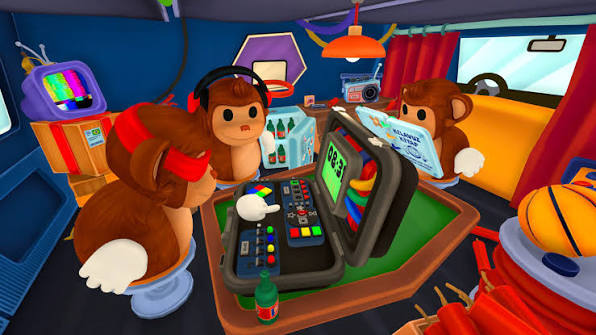
As you move further into BOMBANANA!, you will encounter different types of bomb modules. Each one can require a different combination of observations, manual rules, and physical actions.
This means you should not approach every puzzle with the same assumptions. Instead, first identify what kind of module you are dealing with and then determine what information is relevant.
Build a module recognition habit
When a new puzzle appears, ask yourself:
- What type of module is this?
- What information does it display?
- Which details actually affect the solution?
- Does the module have multiple stages?
- What does the manual say about its current state?
Once the team becomes familiar with common module types, the process becomes considerably faster.
The Deaf Monkey can immediately recognize what needs to be reported, while the Mute Monkey already knows which section of the manual to check. This removes a large amount of unnecessary communication.
Watch for changing puzzle states
Some modules may change after an interaction. When that happens, do not automatically assume that the previous solution still applies.
Instead, treat the new state as a new piece of information. Observe it again, check the relevant rule, and then determine the next action.
This habit is particularly useful in later levels, where puzzles become more complicated and the cost of making assumptions becomes higher.
8. Progress Through Campaign, Endless, and Custom Modes
Once your team has learned the basic mechanics, BOMBANANA! offers different ways to continue practicing. The Campaign provides a structured progression through handcrafted levels, while Endless mode focuses on surviving increasingly difficult waves.
Custom mode is particularly useful for groups that want to practice specific situations. Instead of simply repeating the same level, you can adjust different aspects of the challenge and create a setup that matches your team's current skill level.
Choose a mode based on your experience
Campaign is the natural starting point for new players. It gives your team a structured path through the game's mechanics and gradually introduces more difficult situations.
Endless is better suited to teams that already understand the fundamentals and want to test their consistency. The increasing pressure forces players to communicate efficiently rather than relying on slow explanations.
Custom provides more control over the experience. It can be useful when you want to practice specific modules, adjust the timer, or experiment with additional hazards.
Practice your team's weakest skill
If your team constantly fails because the Blind Monkey struggles with physical interactions, spend more time practicing those actions. If the problem is communication, work on your terminology instead.
There is no need to make every practice session harder. Sometimes repeating a simpler situation until everyone becomes comfortable is the fastest way to improve.
9. Stay Organized When Hazards and Pressure Increase
BOMBANANA! becomes significantly more chaotic as additional challenges enter the game. Environmental hazards can interrupt the normal flow of communication and make it harder for players to concentrate.
The biggest danger is allowing the chaos to destroy the communication system you have already developed. When the timer becomes stressful, players often start talking over each other or giving incomplete instructions.
Keep your communication short and structured
Instead of abandoning your normal system, simplify it.
- Identify the module.
- Give the necessary information.
- Check the manual.
- State the action.
- Confirm if necessary.
- Move on.
This structure is especially valuable when several problems happen at once. Everyone knows what information is currently being processed, so the team is less likely to lose track of the current task.
Avoid talking over your teammates
Three people shouting different instructions simultaneously can make a simple puzzle almost impossible. Give the person currently handling the puzzle enough space to finish the action before introducing the next piece of information.
Good teamwork does not necessarily mean constant communication. It means communicating the right information at the right moment.
Stay calm when the timer gets low
A low timer naturally creates panic, but panic often causes mistakes. If something goes wrong, return to the last piece of confirmed information rather than immediately guessing the next move.
A calm team with ten seconds left can sometimes accomplish more than a disorganized team with thirty seconds remaining.
10. Build an Efficient BOMBANANA! Strategy With Friends
Once you have learned the individual roles and basic puzzle mechanics, the final step is developing a consistent strategy for your entire team. The biggest advantage experienced players have is not necessarily faster reactions. It is the ability to communicate information without wasting time.
Your team should eventually develop its own shorthand for common directions, module types, confirmation signals, and actions. Once these become familiar, players can communicate complicated information with surprisingly few words or gestures.
Create a repeatable defusal routine
A strong team can use a routine like this:
- Assign the three roles before starting.
- Agree on basic directional terminology.
- Identify the modules as soon as possible.
- Let the Deaf Monkey collect the relevant information.
- Let the Mute Monkey interpret the manual.
- Give the Blind Monkey one clear action at a time.
- Confirm important actions.
- Immediately move to the next module after completion.
The advantage of this system is consistency. Everyone knows what they are supposed to do, so there is less confusion even when the bomb becomes more complicated.
Turn mistakes into improvements
If the Blind Monkey performs the wrong action, do not automatically blame the player handling the bomb. Ask whether the instruction was actually clear.
If the Mute Monkey gives the wrong solution, check whether all of the necessary information was provided. If the Deaf Monkey reports the wrong detail, determine whether the module was misunderstood.
This approach turns every failure into an opportunity to improve the team's process.
Learn to communicate without overexplaining
Eventually, experienced teams should be able to reduce long explanations into short, meaningful callouts. The objective is not to communicate as little as possible but to make every message useful.
That is when BOMBANANA! starts to feel completely different. What initially seems like three players struggling to understand each other becomes a coordinated system where each person handles a specific part of the same puzzle.
Conclusion
Learning how to play BOMBANANA! is ultimately about learning how to work with incomplete information. The Blind Monkey provides the physical interaction, the Deaf Monkey provides visual information, and the Mute Monkey interprets the bomb disposal manual. None of these roles can fully solve the puzzle alone, which makes communication the central mechanic of the game.
For beginners, the best approach is to understand each role before worrying about speed. Establish simple communication rules, identify modules carefully, separate observation from interpretation, and confirm important actions before performing them. Once these habits become natural, your team can gradually move through the Campaign and begin experimenting with Endless and Custom modes.
The most important thing to remember is that BOMBANANA! is not simply a game about defusing bombs. It is a game about turning three incomplete perspectives into one complete solution. Learn how your teammates communicate, develop your own shorthand, stay calm under pressure, and the chaos of each bomb becomes much easier to manage.